
Now Reading: Summer of Supercards: Pro Wrestling’s Epic Heatwave of 1985
-
01
Summer of Supercards: Pro Wrestling’s Epic Heatwave of 1985


Summer of Supercards: Pro Wrestling’s Epic Heatwave of 1985
In the long, rich tapestry of professional wrestling, the summer of 1985 stands out as a blazing highlight. This was not just the year of Hulkamania running wild. It was a time when territorial promotions, international powerhouses, and global superstars converged to deliver some of the most memorable events in the sport’s history. From the Mid-Atlantic heat of the NWA’s Great American Bash to the searing drama of World Class’s Star Wars, Japan’s stiff and stunning Burning Spirit in Summer, and the spectacle of WWF’s inaugural King of the Ring, the summer of ’85 was a showcase of ambition, talent, and regional pride. These events laid the groundwork for the seismic shifts that would transform wrestling forever.
Let’s take a deep dive into four of the most significant supercards from that summer 40 years ago.
NWA Great American Bash – July 6, 1985
Venue: American Legion Memorial Stadium, Charlotte, North Carolina
Attendance: Approximately 27,000
Promotion: Jim Crockett Promotions (NWA)

A Southern Tradition Begins
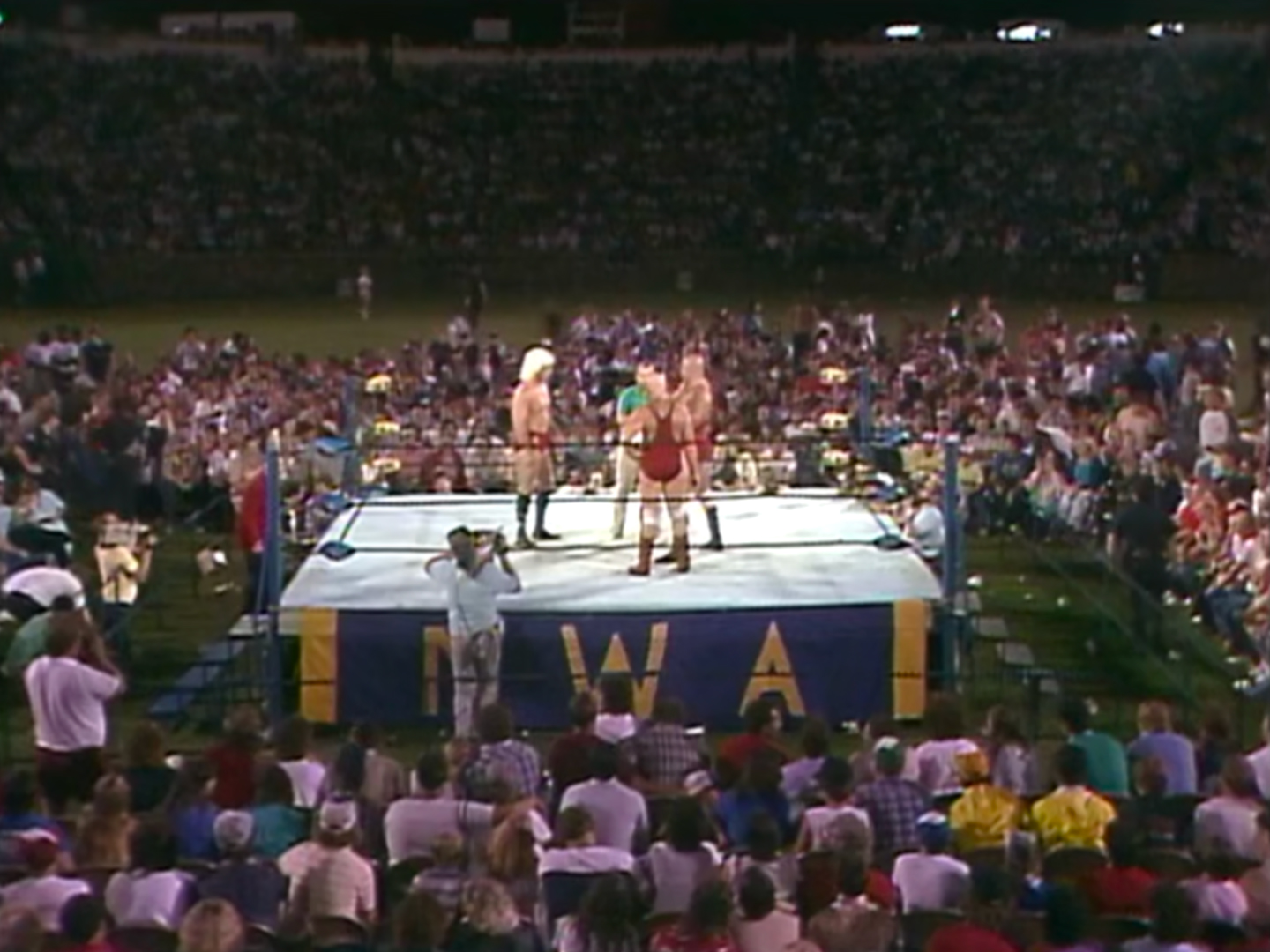
The inaugural Great American Bash in 1985 was more than just a wrestling show—it was Jim Crockett Promotions’ declaration that the NWA was still very much alive in a wrestling world increasingly dominated by Vince McMahon’s WWF. With over 27,000 fans packing the American Legion Memorial Stadium under a sweltering North Carolina sun, this outdoor event was a spectacular blend of regional loyalty, star power, and high-stakes matches.
Key Matches
- Dusty Rhodes vs. Tully Blanchard – In the main event, “The American Dream” Dusty Rhodes challenged Tully Blanchard for the NWA World Television Championship in a steel cage. With Baby Doll suspended above the ring in a cage of her own, the bout was dripping with old-school drama. Rhodes triumphed, becoming the new champion and sending the fans home thrilled.
- Ric Flair vs. Nikita Koloff – The Nature Boy, then in his heelish prime, defended the NWA World Heavyweight Championship against the powerful Soviet enforcer. Though Flair retained his title, the bout told a compelling story of technical finesse against brute strength, and Koloff came out looking like a legitimate threat to Flair’s throne.
- Magnum T.A. vs. Kamala – Magnum was being groomed for a top babyface run, and his decisive win over the Ugandan Giant helped solidify his credibility.
- Rock ‘n’ Roll Express vs. Ivan Koloff & Krusher Khruschev – Few tag teams could light up a crowd like Ricky Morton and Robert Gibson, and their match, though chaotic, gave fans the kind of southern-style tag team action they loved.
Legacy
The Great American Bash would go on to become an annual tradition and, eventually, a cornerstone of WCW programming. But it all started here—with a hot Carolina crowd, a steel cage full of drama, and the NWA clinging fiercely to its identity in the face of change.
2. World Class Championship Wrestling – July 4, 1985: Independence Day Star Wars
Venue: Tarrant County Convention Center, Fort Worth, Texas
Attendance: Estimated 10,000
Promotion: World Class Championship Wrestling (WCCW)
Fireworks Inside and Outside the Arena
World Class Championship Wrestling had already established itself as a national presence, largely thanks to the larger-than-life charisma of the Von Erich family and the syndication power of their television show. On July 4, 1985, they celebrated America’s birthday with a Texas-sized event aptly titled Star Wars. Set in the heart of Fort Worth, the event blended patriotic energy with deeply personal feuds.
Key Matches
- Kerry Von Erich vs. One Man Gang (Chicago Street Fight) – Kerry, still beloved despite suffering a motorcycle accident just a year earlier, was the centerpiece of the event. The match against the massive One Man Gang was a brutal, chaotic affair with chairs, chains, and blood. Kerry’s win was symbolic—both of personal perseverance and regional pride.
- Chris Adams & Gino Hernandez vs. Kevin & Kerry Von Erich – One of the most heated feuds in WCCW history reached a fever pitch here. The duo of Adams and Hernandez, once close allies to the Von Erichs, had turned heel in explosive fashion. This tag bout was fast-paced, filled with near falls, and told a story of betrayal and brotherhood. The match ended controversially, continuing the feud.
- The Great Kabuki vs. Chris Adams – Earlier in the night, Kabuki and Adams had a singles match stemming from a miscommunication in a previous bout. While this match was solid, it mostly served to escalate the tag team storylines that climaxed later in the evening.
Notable Moments
- The pageantry and patriotic themes were strong, including a pre-show fireworks display and renditions of “The Star-Spangled Banner” that had fans on their feet. It was wrestling as Americana.
Legacy
While not as widely remembered as other 1985 supercards, this Star Wars event captured the essence of what made World Class unique: storytelling, family drama, and a deep connection to its local fanbase. The feuds from this show would carry through the rest of the year and into wrestling lore.
III. NJPW Burning Spirit in Summer – August 1, 1985
Venue: Ryōgoku Kokugikan, Tokyo, Japan
Attendance: Approx. 11,000
Promotion: New Japan Pro-Wrestling (NJPW)
Strong Style and Global Stars Collide
In Tokyo, the Burning Spirit in Summer event served as a major showcase for NJPW’s top stars and international talent. Japanese fans were treated to the kind of hard-hitting action that only NJPW could provide, punctuated by a marquee matchup that transcended borders.
Main Event: Antonio Inoki vs. Bruiser Brody
The showdown between Antonio Inoki and Bruiser Brody was everything a main event should be: dramatic, unpredictable, and physically intense. Brody, with his wild-eyed charisma and unorthodox brawling style, clashed with Inoki’s stoic, martial-arts-inspired approach. The match ended in a double count-out, but fans got a brutal war that solidified both men as living legends.
Other Highlights
- Yoshiaki Fujiwara vs. Akira Maeda – A stylistic contrast between Fujiwara’s shoot-style grappling and Maeda’s stiff kicks and proto-MMA approach. This match catered to purists and foreshadowed the rise of UWFi and shoot-style promotions.
- Tatsumi Fujinami vs. Black Tiger (Mark Rocco) – A fast-paced junior heavyweight bout that thrilled fans and highlighted NJPW’s continued focus on cruiserweight innovation. Their chemistry was electric, and the match was widely praised.
Cultural Context
In Japan, wrestling wasn’t just sport—it was theater, philosophy, and combat rolled into one. Inoki’s leadership kept NJPW firmly rooted in the idea of wrestling as a serious discipline. The card was international in scope, but distinctly Japanese in tone and execution.
Legacy
The Burning Spirit in Summer show reinforced NJPW’s status as a global brand with an eye for in-ring excellence. It also marked one of the last major matches between Inoki and Brody before Brody’s shocking death in 1988. For fans in Tokyo, it was a night of legends battling on sacred ground.
IV. WWF King of the Ring – July 8, 1985
Venue: Sullivan Stadium, Foxborough, Massachusetts
Attendance: Approx. 23,000
Promotion: World Wrestling Federation (WWF)
Hulkamania Meets Tournament Tradition
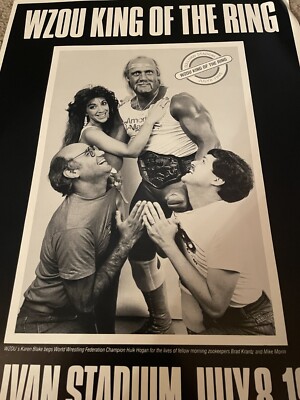
The WWF was in full-on expansion mode in 1985. Just months removed from the inaugural WrestleMania, Vince McMahon’s empire was conquering cities coast to coast. The King of the Ring tournament, though not yet a pay-per-view institution, debuted in grand fashion at Sullivan Stadium. With over 23,000 fans in attendance, it was a massive outdoor spectacle and one of the most-attended WWF events of the summer.
Tournament Highlights
- Don Muraco emerged victorious in the 8-man tournament, defeating Iron Sheik, Tito Santana, and the Junkyard Dog en route to being crowned the first official King of the Ring. Muraco, already an established heel, gained a new level of prestige with the crown.
- The tournament structure allowed for rapid storytelling: underdog performances, sneak wins, and heated face vs. heel dynamics played out over a single night. It was WWF’s answer to the Southern tournament tradition but with a slicker presentation and grander production.
Non-Tournament Match: Hulk Hogan vs. Nikolai Volkoff
As the WWF Champion, Hulk Hogan didn’t participate in the tournament, but his presence loomed large. His main event match against Soviet antagonist Nikolai Volkoff was classic Cold War-era storytelling—USA vs. USSR, good vs. evil. Hogan won, of course, to a deafening pop from the Massachusetts crowd.
Other Matches
- Paul Orndorff vs. Cowboy Bob Orton – A stiff, technically sound match that gave Orndorff some redemption after his WrestleMania I loss.
- Brutus Beefcake vs. Tony Atlas – A clash of styles that saw the crowd get behind Atlas in a big way.
Legacy
While this King of the Ring wasn’t televised nationally, it laid the foundation for a tournament that would become a staple of WWF/E programming throughout the ’90s. More importantly, it proved that stadium shows could work even outside of New York and Los Angeles—a lesson McMahon would apply again and again as he built toward WrestleMania III.
Conclusion: The Summer That Set the Standard
The summer of 1985 was a crossroads for professional wrestling. Each supercard told a different story:
- The NWA was doubling down on its traditions and southern roots with The Great American Bash.
- World Class was leveraging familial drama and patriotic themes to craft unforgettable narratives.
- New Japan was refining wrestling into a craft, a philosophy, and a global showcase with Burning Spirit.
- And WWF was spreading its brand of sports entertainment spectacle to outdoor stadiums, setting the stage for the national—and later global—takeover.
These four events didn’t just entertain—they helped define what wrestling could be. In an era before the Monday Night Wars, before the internet, and before wrestling’s modern corporatization, these shows were driven by character, storytelling, regional pride, and a burning desire to outdo the competition.
Thirty years later, fans still talk about these cards with reverence—and for good reason. The summer of 1985 wasn’t just hot. It was historic.